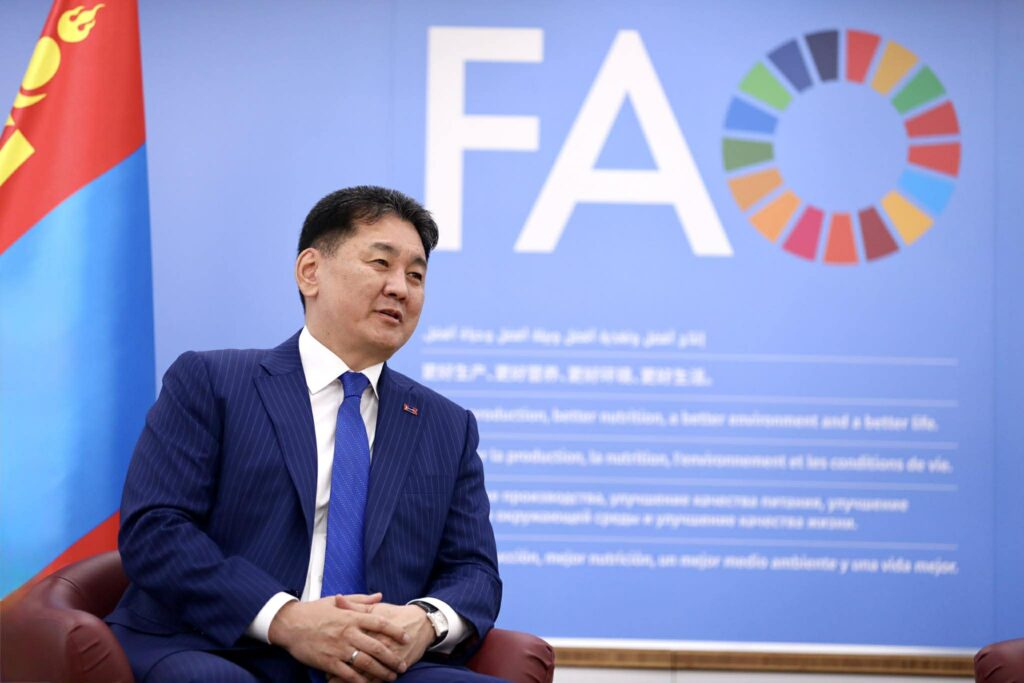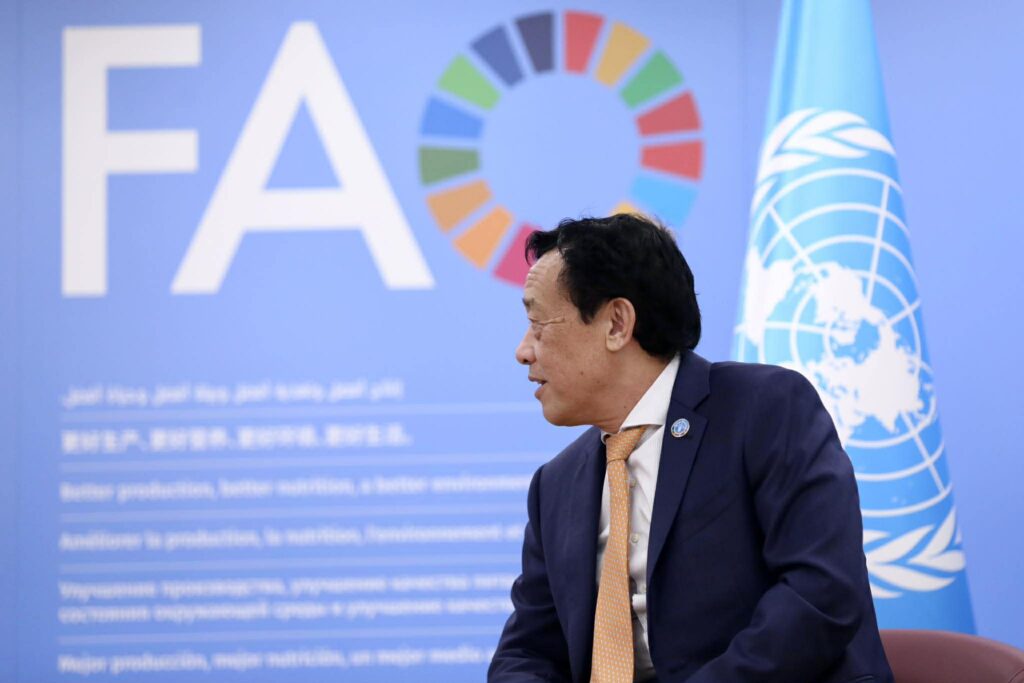
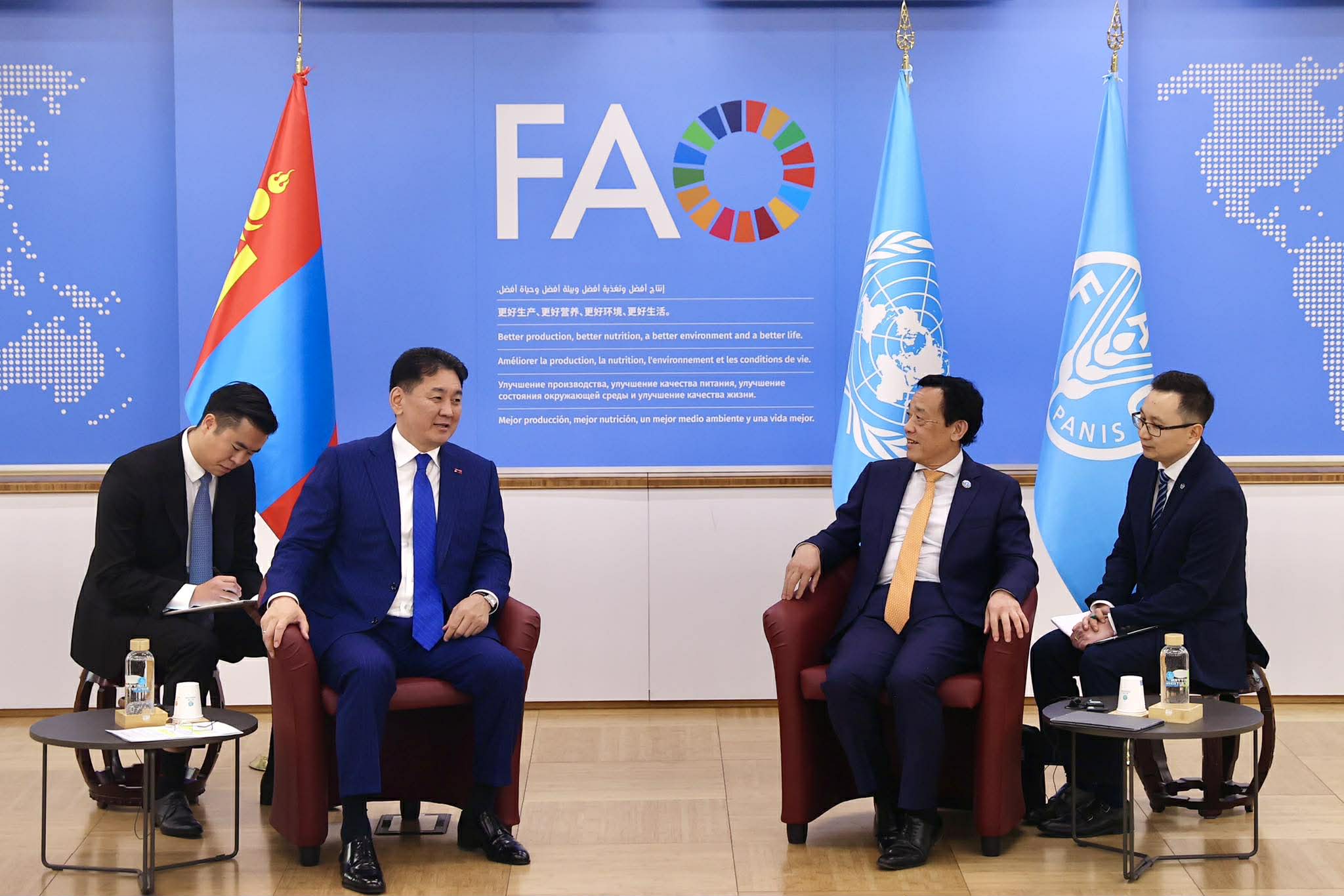
FAO Director-General Pays Courtesy Call on President Khurelsukh
The State Visit of President of Mongolia Khurelsukh Ukhnaa to the Italian Republic is ongoing.
The Director-General of the Food and Agriculture Organization (FAO) of the United Nations, Dr. Qu Dongyu, paid a courtesy call on President Khurelsukh. The two sides exchanged views on cooperation, progress of joint projects and programs, and issues to be addressed in the future.
The President noted that the FAO has continuously made valuable contributions to Mongolia’s food and agriculture sector.
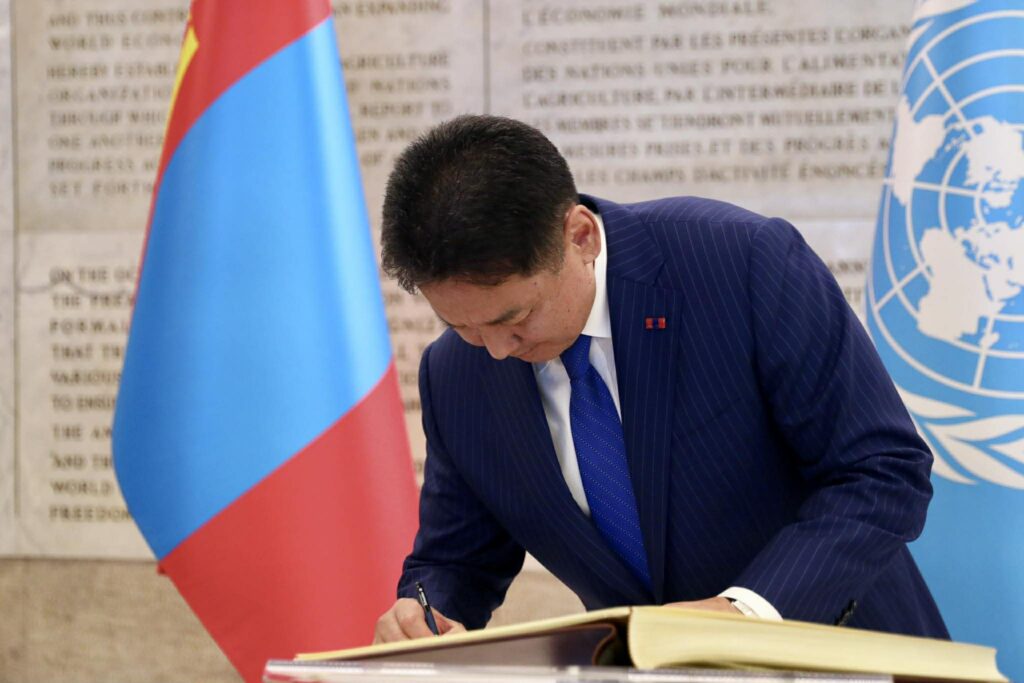
In the FAO’s Book of Honorable Guests, President Khurelsukh wrote, “I am delighted to be visiting the Food and Agriculture Organization, the coordinating body of nations’ efforts in reducing famine and poverty and strengthening food supply and safety. With sincere congratulations on the FAO’s 80th anniversary, I extend my best wishes in achieving the Sustainable Development Goals.
With a nomadic culture and rangeland pastoralism, Mongolia’s intentions aim at extensive cooperation in rangeland management, preserving land and water supplies, increasing stable food production, and reducing the negative impacts of climate change.
Within the framework of the Resolution on the International Year of Rangelands and Pastoralists, we are committed to collaborating on tangible endeavors aligned with the interests and needs of the public worldwide.
May your aspirations toward ‘Better production; Better nutrition; Better environment; Better life’ be fulfilled. May humanity prosper in a healthy and safe environment.”
Mongolia became a member of the United Nations Food and Agriculture Organization (FAO), which operates in over 130 countries, in 1973. The FAO Representative Office in Ulaanbaatar was established in 2009.
The organization’s main operations focus on contributing to the implementation of Sustainable Development Goals 2030 in Mongolia by ensuring food safety, improving nutrition, and improving the living conditions of locals.
Moreover, the FAO works with sponsoring partners, research institutions, civil society, and herder communities, playing a crucial role in advancing sustainable agriculture, safeguarding the environment, and preserving biodiversity.